Southern Ohio Tech Corridor Opportunity

71.5 Acres in America's Next Tech Corridor

Strategic Land in the Emerging Tech Corridor

SoftBank broke ground March 20, 2026 on a 10 GW AI data center campus in Piketon, backed by $33.3 billion in Japanese-funded energy generation and a $4.2 billion AEP transmission buildout. The project is 20 min from this property. Another facility going in 5 min up the road. Google is building a $1B data center in adjacent Scioto County. 71.5 acres with gigabit fiber, high-visibility frontage, and elevated terrain.

EARLY BIRD PRICING · INCREASES TO $1.3M$950,000

Total Acres
Acres Of Pasture
Acres of Forest
Major Road Frontages

EXPLORE THE EPICENTER OF SOUTHERN OHIO'S TRANSFORMATION

Strategic Location

At the intersection of CR-20 and SR-32. 7,000–12,000 vehicles daily (Ohio DOT). 5 min to hospital. 10 min to dining. 40 min to Ohio University. 20 min to SoftBank PORTS campus. Spectrum gigabit fiber built out.

Development-Ready Infrastructure

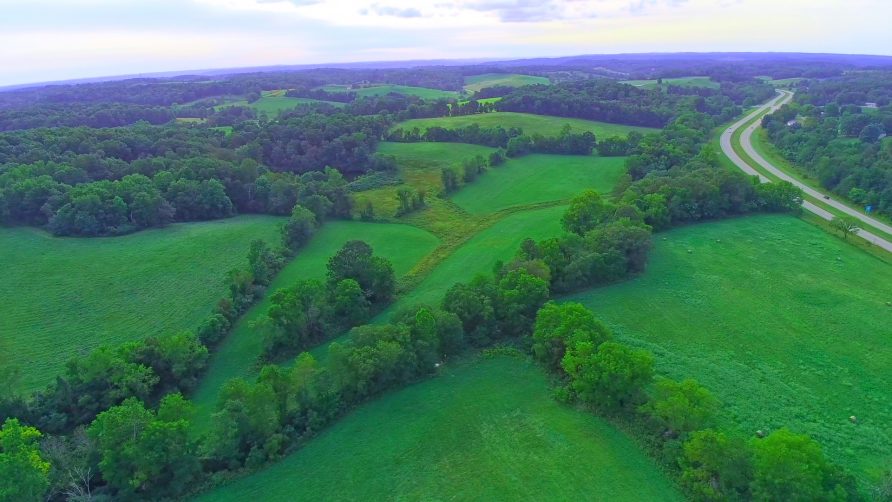
0.4 miles along the Appalachian Highway, 0.2 miles on Five Points Road. Elevated on the water table — surface water drains south/southwest via Buckeye Creek, away from the PORTS campus. All the economic upside of a half-trillion-dollar development, none of the environmental exposure.

They Made the Move to
Southern Ohio

Johny B.

“Living in Japan, the land of four seasons, I’ve always appreciated natural beauty. Southern Ohio’s Appalachia reminds me of home, and it’s absolutely stunning.

Sergio O.

I’ve traveled the globe and lived in twelve different countries across four continents. Yet, I’ve never found a place more captivating and serene than southern Ohio.”

Martin W.

I’ve experienced life on both the west and east coasts, but nothing compares to the peace and tranquility I’ve found in Jackson, Ohio.”

Robin R.

“Moving away from my East Coast roots was a big decision, but discovering the hidden oasis of Jackson, Ohio has been a life-changing experience. My family back in New Jersey now considers the possibility of relocating to this beautiful, rural gem.”

Tina J.

“Leaving California after 34 years was a daunting prospect, but southern Ohio exceeded all my expectations. The rural setting offers a refreshing change of pace, and the Ohio education system has been exceptional for my family.”

The Southern Ohio Data Center Corridor

Verified facts from DOE, AEP Ohio, and federal filings — not speculation.

SoftBank / SB Energy

Groundbreaking: March 20, 2026 at the former Portsmouth Gaseous Diffusion Plant, Piketon, Ohio. DOE is leasing 3,700 acres of federal land to an SB Energy affiliate. Target: 10 GW data center campus. Phase 1: 800 MW.

Source: U.S. Department of Energy

\.3 Billion in Generation

Japanese funding committed for 9.2 GW of new natural gas generation distributed across the southern Ohio region. Part of the U.S.-Japan strategic investment framework totaling \ billion in bilateral commitments.

Source: Ohio Statehouse News Bureau

\.2 Billion Transmission

SB Energy committed to fund \.2 billion in new high-voltage transmission infrastructure through AEP Ohio. Power expected to flow by 2029. AEP Ohio reports 5,642 MW of binding data center load contracts already signed.

Source: AEP, AEP Ohio PUCO Filing

\Google $1B Data Center (Adjacent County)

Google (via Tilted Gate LLC) is building a $1 billion, 500,000 sq ft data center in Franklin Furnace, Scioto County — adjacent to Jackson County. Environmental permits clearing as of March 2026. This is a separate project from SoftBank, confirming the corridor is attracting multiple major tech companies.

Source: Scioto County environmental filings, January 2026

$40 Million Community Investment

SoftBank pledged \ million for local schools and medical infrastructure. SB Energy committed that the project will fund its own power generation and transmission infrastructure — not burdening Ohio residential ratepayers.

Source: DOE Announcement, March 20, 2026

Critical Housing Shortage

Jackson County issued 33 building permits in all of 2024. There are only 200-300 hotel rooms within 30 miles of Piketon. Median rent: $769/month. There is virtually zero infrastructure to absorb tens of thousands of incoming workers. Every acre with utilities and road access becomes critical.

Why This Is Different

Previous PORTS proposals were political announcements. This project has: a signed DOE land lease, a named utility partner with binding contracts, a bilateral sovereign trade agreement, an actual groundbreaking with construction equipment, and a named developer entity (SB Energy).

Why This Property

High-Visibility Highway Frontage

0.4 miles along State Route 32 (Appalachian Highway) and 0.2 miles along County Road 20. Ohio DOT reports 6,500–12,000 vehicles per day. Commercial-grade traffic supporting gas station, food service, hospitality, or logistics operations.

Spectrum Gigabit Fiber

High-speed broadband already built out to the property. Critical for tech corridor support operations, remote workers, and any connected business. Most rural parcels in southern Ohio cannot offer this.

Elevated Water Table Position

This property sits on the Jackson County plateau at 803 feet elevation — 138 feet above the PORTS campus (665 ft) and 226 feet above Piketon town (577 ft) where the PORTS facility is located. Buckeye Creek and surface water drain south/southwest through the Symmes Creek system — away from the data center campus and its ongoing DOE environmental remediation. Independent hydrological separation from the Scioto River valley and Teays aquifer systems. (DOE PORTS Remediation)

Proximity Without Exposure

20 minutes from the SoftBank PORTS campus. 5 minutes to Jackson and Holzer Hospital. 10 minutes to restaurants and shopping. 40 minutes to Ohio University (NASA partnership). 25 minutes to University of Rio Grande. Close enough to benefit from every dollar of investment — far enough to avoid industrial impact.

Development-Ready Acreage

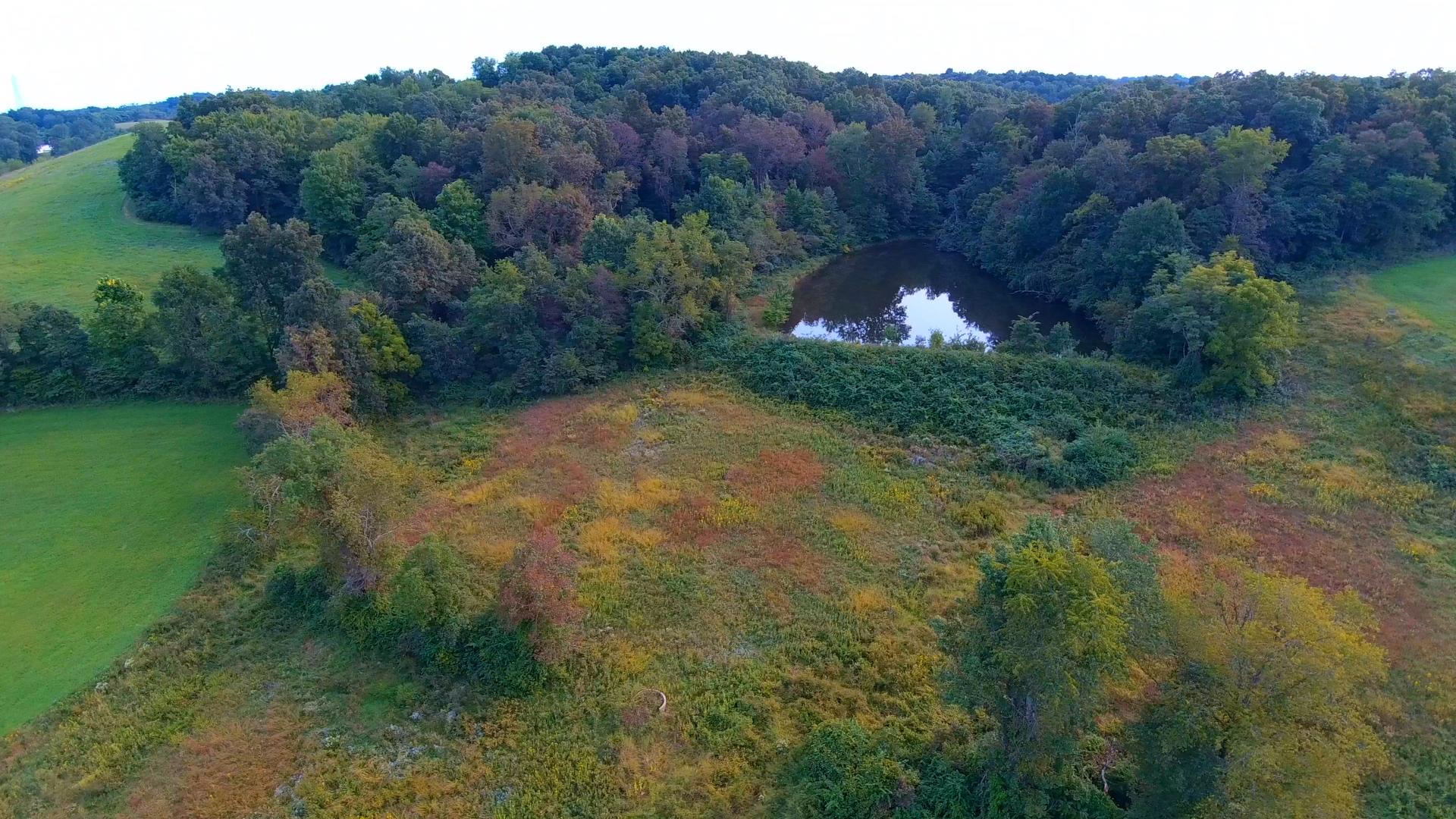
71.5 acres across 5 parcels: ~51 acres of open rolling pasture (ideal for subdivision, RV park, or commercial development) and ~20 acres of mature forest with a spring-fed pond (ideal for premium homesites or conservation). Buckeye Creek runs through the property.

Multiple Development Paths

Workforce housing for 35,000+ construction workers. Executive homesites for permanent tech staff. Extended-stay or RV park operations. Commercial retail, fuel service, or food service on highway frontage. Construction logistics staging. Or hold as a land investment in the path of generational infrastructure growth.

What Happens When Data Centers Arrive

The Loudoun County, Virginia precedent — America's first data center corridor

78.7%

Data center value increase (YoY, 2025)

\M+

Per acre (entitled corridor land, 2025)

23%

Of county tax base from data centers

\B

Loudoun County total tax base (2025)

Loudoun County grew to 10 GW over 25 years. Piketon is targeting 10 GW on a single campus in a compressed timeline. The supporting ecosystem — housing, services, hospitality, commercial — that took decades to build in Virginia does not yet exist in southern Ohio. It will need to be built. (Source: Data Center Dynamics)

Southern Ohio — More Than You Expect

Outdoor Recreation

Hocking Hills State Park. Baileys Trail System (88-mile mountain bike network — largest east of the Mississippi). Lake Katharine, Lake Alma, Hammertown Lake. Serpent Mound. Ohio Foothills tourism brand launched February 2026.

Major Attractions Nearby

Cincinnati Zoo (#1 North America, ~2 hrs). Columbus Zoo (#5, ~1.5 hrs). Kings Island (largest Midwest amusement park, ~2 hrs). Cedar Point (#1 US amusement park, ~3 hrs). Hillbilly Hotdogs (~1 hr).

Cost of Living & Safety

Below national average cost of living. Violent crime 7.9% below national average. Property crime 10.4% below national average. 89% high school graduation rate. Ohio education system consistently ranked among top states.

Higher Education

Ohio University (~40 min) — partnership with NASA. University of Rio Grande (~25 min). Both positioned to supply workforce for the growing tech corridor.

Regional Investment

Appalachian Regional Commission invested \.9M in FY 2025 for training, infrastructure, and business development. Federal focus on Appalachian Ohio economic transformation is at historic levels.

日本の投資家の方へ

Japan is the #1 source of foreign direct investment in the United States (JETRO). The SoftBank project is part of a bilateral US-Japan trade framework. We welcome inquiries in English or Japanese. 英語または日本語でのお問い合わせを歓迎します。

Illustrative Development Scenarios

These are not promises. They are simple base-case models to show why 71.5 acres at this intersection can attract different buyer types.

All scenarios are subject to zoning, subdivision approval, engineering, drainage, access, utility capacity, and final site plan. Figures below are gross-revenue illustrations before development cost, financing, and operating expense.

RV park / workforce lodging

A 200-pad RV park is the most immediate income thesis if corridor construction demand tightens local lodging. At $900 per pad per month:

  • 200 pads x $900/month = $180,000 gross monthly revenue
  • $180,000 x 12 = $2,160,000 gross annual revenue at full occupancy
  • At 85% stabilized occupancy, gross annual revenue is still about $1,836,000
  • Concept footprint: roughly 35 to 40 acres, leaving room for interior roads, laundry, shower house, office, and future expansion

Workforce subdivision

A 50-lot subdivision works if the buyer sees Jackson County as the practical bedroom market for corridor workers, contractors, and support staff.

  • 50 finished lots at $65,000 per lot = $3,250,000 gross lot sellout
  • Same 50 lots with entry-level homes averaging $299,000 each = $14,950,000 gross home sellout for a vertical builder
  • Concept footprint: about 40 to 50 acres, depending on lot size, roads, detention, and reserve requirements
  • Strongest pitch: close to Jackson services, highway access, and lower basis than Columbus-area growth markets

Commercial highway frontage

The frontage thesis is a fuel / food / lodging play, with the rest of the acreage held for later phases.

  • Illustrative pad mix: 2 acres for fuel and convenience, 2 acres for food service, 4 acres for lodging, 2 acres for shared access and stormwater
  • Base-case frontage land disposition: 8 saleable acres x $300,000 per acre = $2,400,000 gross land sale value
  • Alternative ground-lease strategy: 8 acres x $40,000 per acre per year = $320,000 annual ground rent
  • Back acreage remains available for residential, RV, storage, or future resale

Premium estate homesites

This is the lowest-density, highest-privacy path: larger lots that use the woods, pond, and creek as the premium rather than as leftover land.

  • Illustrative layout: 9 lots averaging 6 to 8 acres each
  • Base-case pricing: 9 lots x $195,000 each = $1,755,000 gross sellout
  • Alternative lower-basis layout: 10 lots x $160,000 each = $1,600,000 gross sellout
  • Best use when buyer values privacy, views, water features, and a more defensible upscale product

Land bank / hold strategy

At the current early-bird price, the site is roughly $13,287 per acre. A buyer does not need Loudoun County pricing for the hold thesis to work.

  • At $20,000 per acre, implied land value is about $1,430,000
  • At $25,000 per acre, implied land value is about $1,787,500
  • At $30,000 per acre, implied land value is about $2,145,000
  • Those re-rates still sit far below mature, fully entitled data-corridor pricing in more developed markets

Frequently Asked Questions

The strongest land listings do not dodge objections. They answer them directly and credibly.

Isn't this overpriced for Jackson County?

That is the right first question, but it is also the wrong comparison if you only look at generic county acreage. This site is not a landlocked hunting tract. It is a 71.5-acre corner at SR-32 and County Road 20 with meaningful highway frontage, mixed-use optionality, and a corridor story tied to real public infrastructure announcements.

The better way to underwrite it is by use case: frontage value, subdivision value, RV or lodging value, and hold value as the corridor matures. If a buyer only wants generic rural acreage, cheaper land exists. If a buyer wants frontage and optionality near a major public-private buildout, this is a different category.

What if the SoftBank project doesn't happen?

The corridor thesis should never depend on one sentence of promotional copy. The practical answer is this: the site still has frontage, acreage, and development optionality even without the full Piketon buildout. The corridor story improves the upside; it is not the only reason the land has value.

Also, this is not purely rumor-driven. DOE publicly announced the PORTS Technology Campus concept, SB Energy and AEP Ohio were named publicly, and AEP Ohio separately reported signed binding data-center load contracts in February 2026. The right framing is not "risk-free." It is "multiple reasons to own the land, plus corridor upside if the buildout continues."

Why should I buy now instead of waiting?

Because the market rarely sends a formal invitation before repricing. The easiest time to buy frontage and optionality is before every buyer agrees on the story. Waiting reduces uncertainty, but it also usually raises basis.

This listing already reflects an early-bird structure: $950,000 now with a planned increase to $1.3 million. Buyers who want maximum certainty can wait. Buyers who want better basis usually move earlier and do tighter due diligence.

Is the water safe given the PORTS history?

The former PORTS site has a long environmental history, and buyers should take that seriously. This property is in Jackson County, not on the former federal reservation, and the page should present that distinction clearly.

But the credible answer is not a blanket reassurance. The credible answer is site-specific due diligence: water-source details, parcel-level testing if needed, and environmental review appropriate to the buyer's intended use. Serious buyers should rely on their own consultants, not on a marketing paragraph alone.

What can I actually build on this land?

The practical answer depends on zoning, access, utilities, drainage, and subdivision engineering. The broad opportunity set is stronger than most rural listings: highway-oriented commercial frontage, RV or workforce lodging, premium estate lots, a 50-lot residential subdivision, or a pure hold strategy.

If you are a buyer with a specific use in mind, the right next step is a utility-and-entitlements review, not a generic conversation about "potential." The site is valuable because it supports more than one path, not because any single path is guaranteed.